Key Objective of the Brief
To capture the spirit, community and daily rhythm of the Great Victorian Bike Ride — one of Australia’s most loved cycling events — while delivering TAC’s road safety messages in a way that felt like part of the experience rather than an interruption to it.
Five days. Five films. Each one a recap of the day’s ride, each one carrying a safety message for the next.The films screened every evening in the dinner hall to hundreds of riders — and were simultaneously accessible via the GVBR platform to the thousands more spending the night in their tents along the route.
Getting the tone right, every single night, to an audience that stretched well beyond the dinner hall, was the whole challenge.
What Was the Idea?
Embed a small, trusted crew into the event for the full five days along the Great Ocean Road and produce a daily video series that riders actually wanted to watch. Each film recapped the day — the scenery, the moments, the people — and closed with a TAC safety message relevant to the next day’s ride. Helmets. Lights. Hand signals. Delivered with warmth, not warning.
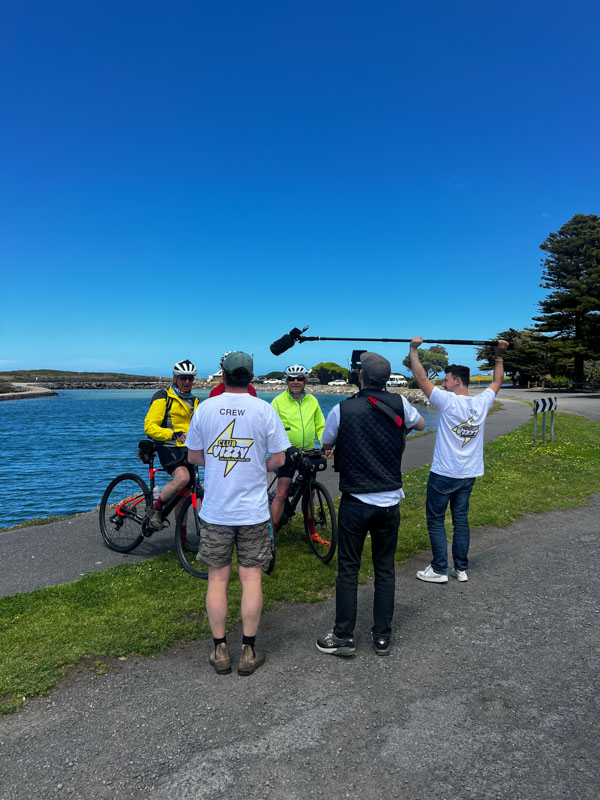
The series was hosted by Simon Gerrans — professional road cyclist and Tour de France stage winner. His involvement went well beyond a pre-filmed studio piece. Simon rode the event himself, was filmed out on the Great Ocean Road throughout the five days, and at one point addressed a large group of children from his son’s school — speaking directly to them about the day ahead and the road safety habits that matter when you’re out on a bike. That moment, captured live on the ride, became one of the most powerful pieces of content in the series. A genuine connection between a sporting hero and a young audience, on location, completely unscripted.
His two camera hosting links were also pre-filmed at his Melbourne bike shop before the event and edited into each daily film on the road — giving the series a consistent, credible voice across all five days. Two layers of Simon: the pre-planned and the spontaneous. Both essential.
The Great Ocean Road gave everything a natural cinematic quality — one of the most beautiful stretches of coastline in the world as the backdrop, and five days to find the human stories within it.A sixth film — a full event wrap — was produced in the week following the ride and delivered for TAC’s YouTube channel, giving the campaign a lasting piece of content beyond the event itself.
What Did The Tropics Bring to It?
Five days on the road with no days off, a 3pm edit deadline every afternoon, and an audience of thousands waiting. That’s not a production schedule — it’s a way of working that very few crews can sustain without the output suffering. The Tropics did it without missing a beat.The pre-production of Simon Gerrans’ hosting links required careful planning — scripting and filming multiple to-camera pieces at his bike shop before the event that would remain relevant and timely when edited into each day’s specific film on the road. Getting that right in advance, without knowing exactly how each day would unfold, is a creative and logistical challenge most productions underestimate.
On the road, having Simon embedded in the event as a rider — not just a host — created opportunities that couldn’t have been planned for. The moment he stopped to address a group of kids from his son’s school, speaking naturally about road safety with the Great Ocean Road stretching out behind him, is the kind of content that only happens when a director has the instinct to recognise the moment and the crew ready to capture it.
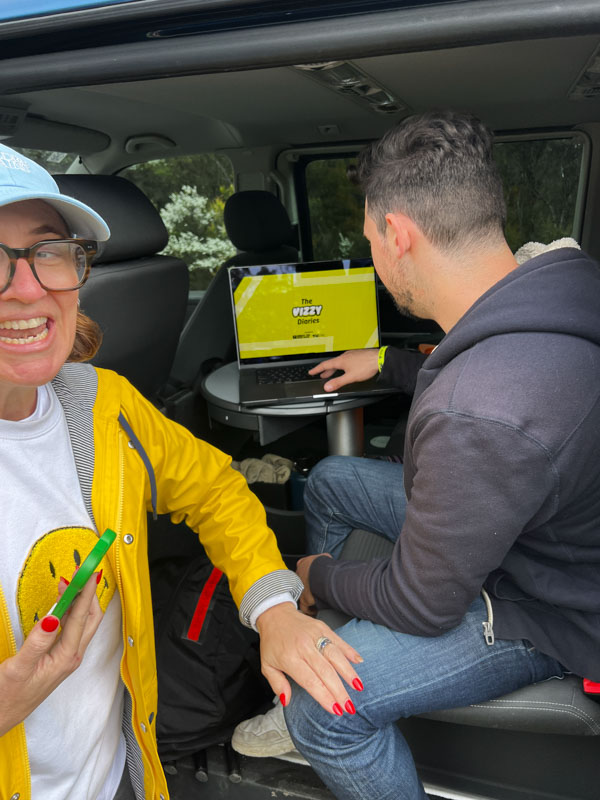
The setup on the road was a precise three-person machine. Alec McCloskey and Jensen Cope out each morning — collecting vox pops, shooting B-roll, following Simon on the ride and capturing full event coverage. Stephen Di Gravio set up in the back of the support van from the start of each day, loading footage as it came in, cutting in real time, dropping in the pre-filmed links, and communicating back to Alec and Jensen exactly what he still needed to complete the edit. A live, moving production pipeline — the kind that only works when every person in it completely trusts the others.
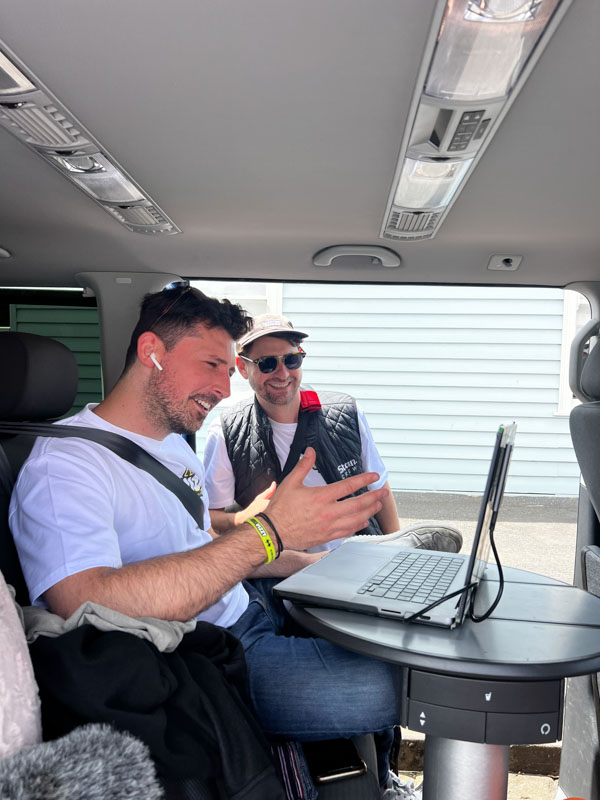
The van became a fully functional edit suite on wheels — a unique production setup that allowed the team to stay embedded in the event while delivering broadcast-ready content against a daily deadline. The BTS images from the project capture this well: Stephen surrounded by monitors and drives in the back of the van, the road rolling past the windows, the action continuing around him outside.
The 3pm deadline was non-negotiable. Each film needed to be finished, reviewed and ready to screen before riders sat down for dinner — and simultaneously uploaded to the GVBR platform so that thousands of participants could access it from their tents along the route. High energy, high stakes, every single day. The TAC safety messages were woven into each film with enough care that they felt like part of the story. A reminder about lights doesn’t land the same way from a lectern as it does woven into footage of the very road riders will face tomorrow morning. That’s the craft.
Was AI Used?
No. All capture, edit and delivery was handled through traditional production craft — pre-filmed at the bike shop, shot on the road, cut in the van, screened the same evening.
KEY OUTPUTS
- 5 × daily event recap films — hosted by Simon Gerrans, screened each evening in the dinner hall and simultaneously accessible via the GVBR platform to thousands of participants, each carrying a TAC road safety message for the following day’s ride
- 1 × full event wrap film — produced in the week following the ride, delivered for TAC’s YouTube channel
- Total: 6 films across the campaign
Key Challenges
Pre-filming Simon Gerrans’ to-camera hosting links at his bike shop before the event — scripting and capturing content that would remain timely and relevant when edited into each specific day’s film on the road, without knowing exactly how those days would unfold.
Managing Simon Gerrans as both an active participant in the ride and the series host — tracking his movements on the road, being ready when unplanned moments presented themselves, and capturing spontaneous content alongside the pre-planned hosting pieces.
Recognising and capturing the unscripted moment when Simon addressed a group of children from his son’s school on the Great Ocean Road — a live, unrepeatable piece of content that required instinct, preparation and a crew always ready to roll.
A hard 3pm daily deadline — Stephen Di Gravio editing from the back of the moving support van, loading footage as it came in, integrating pre-filmed Simon Gerrans links, cutting against the clock while simultaneously directing Alec and Jensen on what additional shots were still needed.
Operating as a live, moving production pipeline across five consecutive days — shoot, cut, deliver, repeat — with no buffer days, no opportunity to go back, and no room for the output to drop in quality.
Reaching an audience far beyond the dinner hall — each film simultaneously accessible via the GVBR platform to thousands of participants in their tents along the route, raising the stakes on every creative and technical decision.
Sustaining the physical and creative demands of five days of intensive field production as a crew of three — the trust, communication and shared instinct required to work at this pace, at this standard, for this long.