Key Objective of the Brief
To show that MakeDo unlocks a world of limitless creativity in children — and to do it in a way that felt genuinely true to the experience of using it. MakeDo is a creative learning tool that enables kids to build just about anything from cardboard. The film needed to capture all the positive learning attributes of MakeDo in an authentic classroom setting, with the goal of introducing the product into education streams locally and around the world.
One hero education film. Built to live on MakeDo’s education tab and do real work — not just look good, butactually make someone watching it want to bring MakeDo into their school.
What Was the Idea?
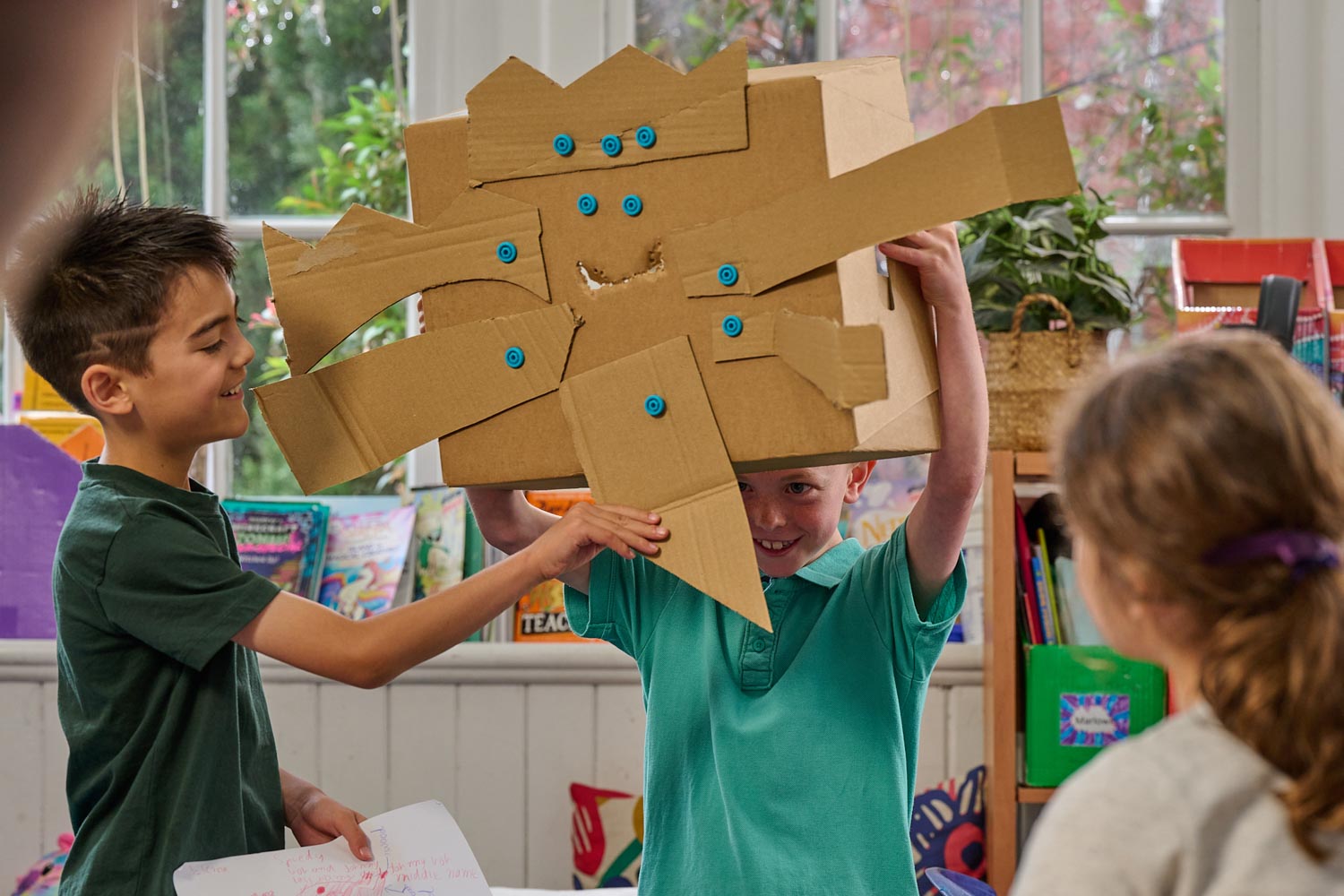
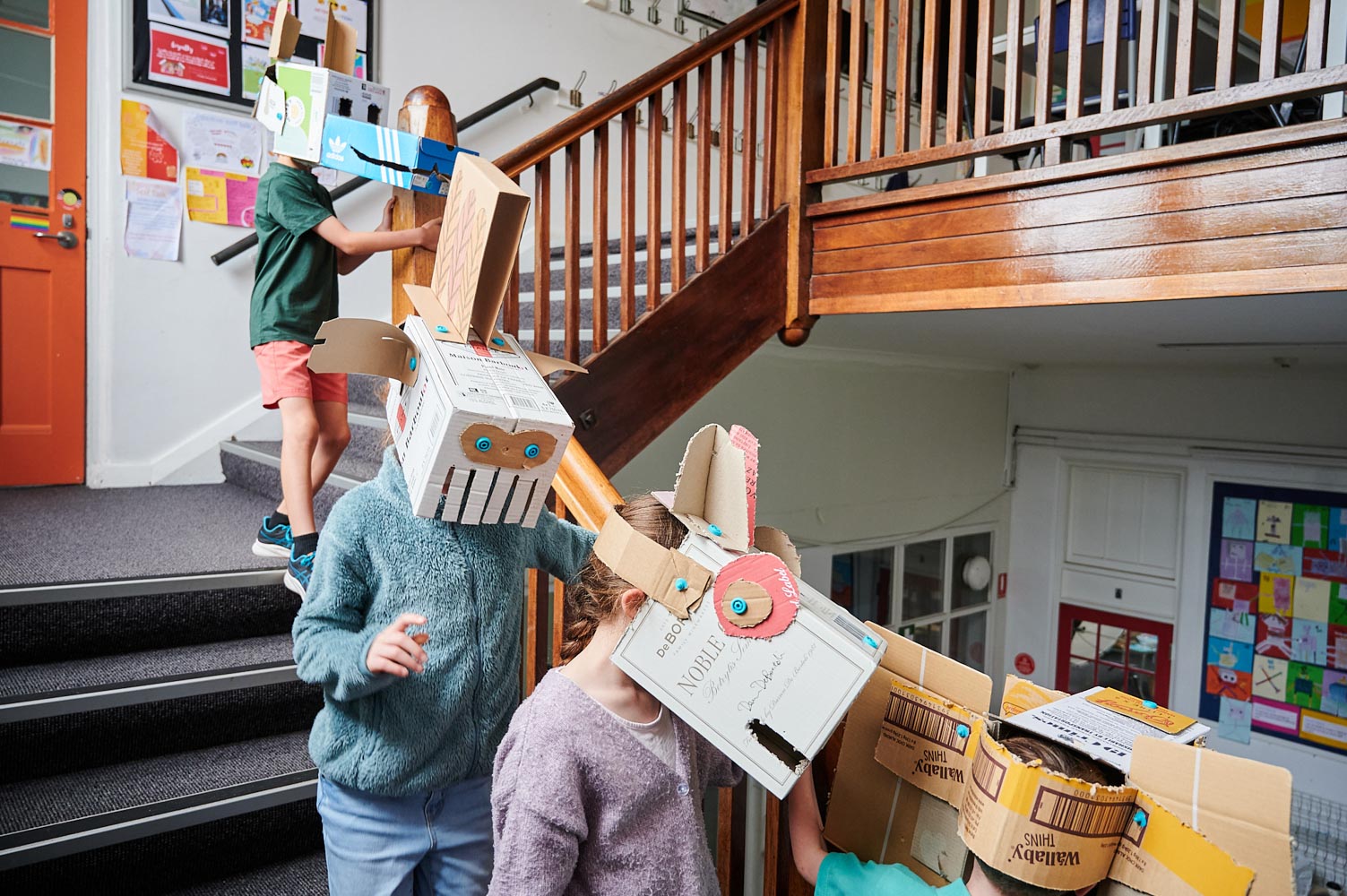
Kids dream big, so they make big. The idea was simple: put MakeDo in the hands of real children in a place they already felt comfortable and confident, set them tasks that let them play and create freely, and then get out of the way and capture what happened.
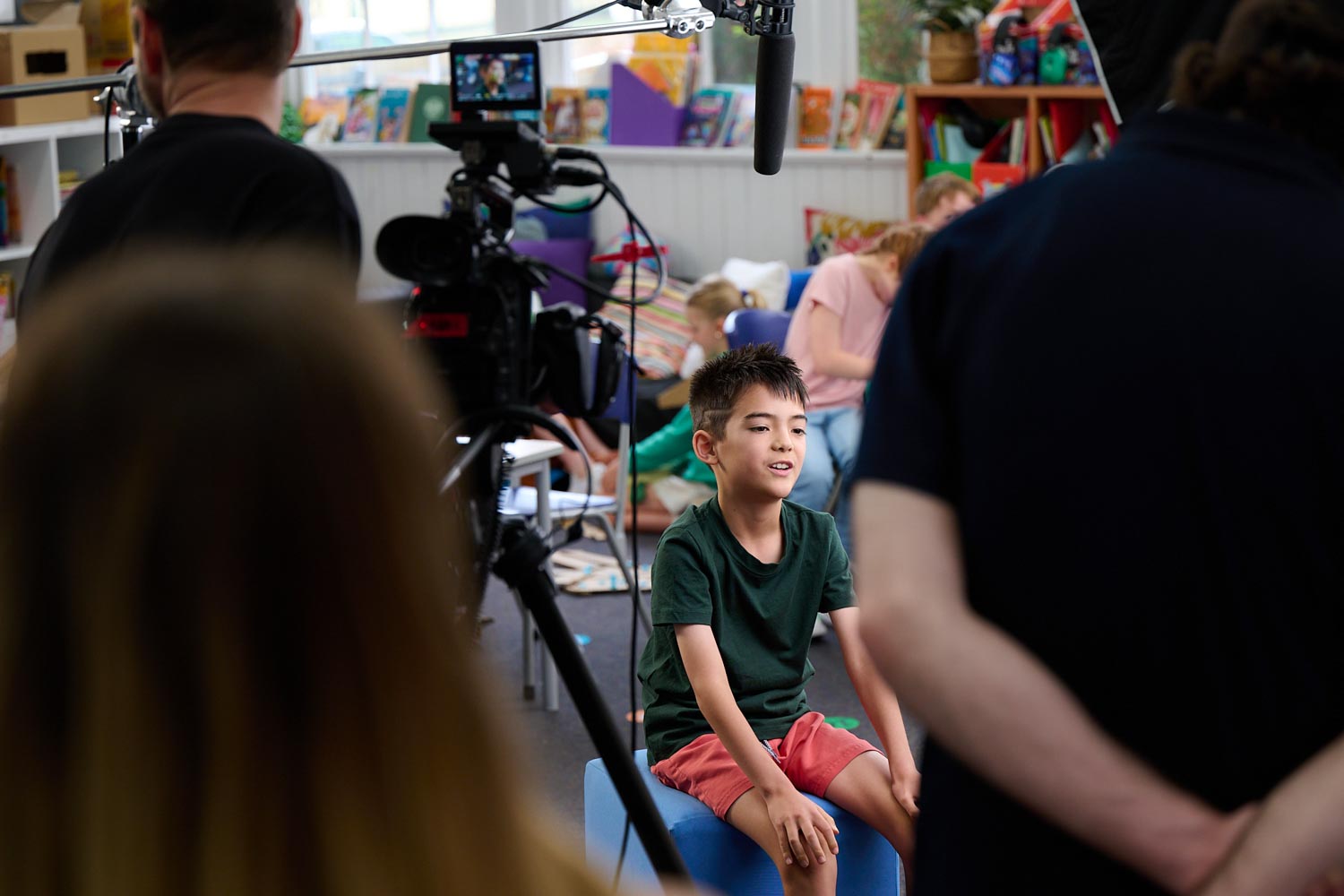
Rather than casting through an agency, The Tropics went directly to Ripponlea Primary School — finding the most enthusiastic kids across three age groups through the school itself and the surrounding community. Real teachers. Real students. A familiar environment where forgetting the cameras are rolling is actually possible.
Twenty-three children were brought in across three staggered groups throughout the day, each group working with their age-appropriate teachers — Luca Dickinson, Jonathan Wood, Lydia Ioannidis and Robert Griffith — who were genuine believers in the product. We drew on the MakeDo team’s own experience to design activities that let each group immerse themselves fully and create their own masterpieces.
What Did The Tropics Bring to It?
This is the work The Tropics was built for. Capturing real children being genuinely themselves — enthusiastic, creative, unselfconscious — requires a very specific approach on set.
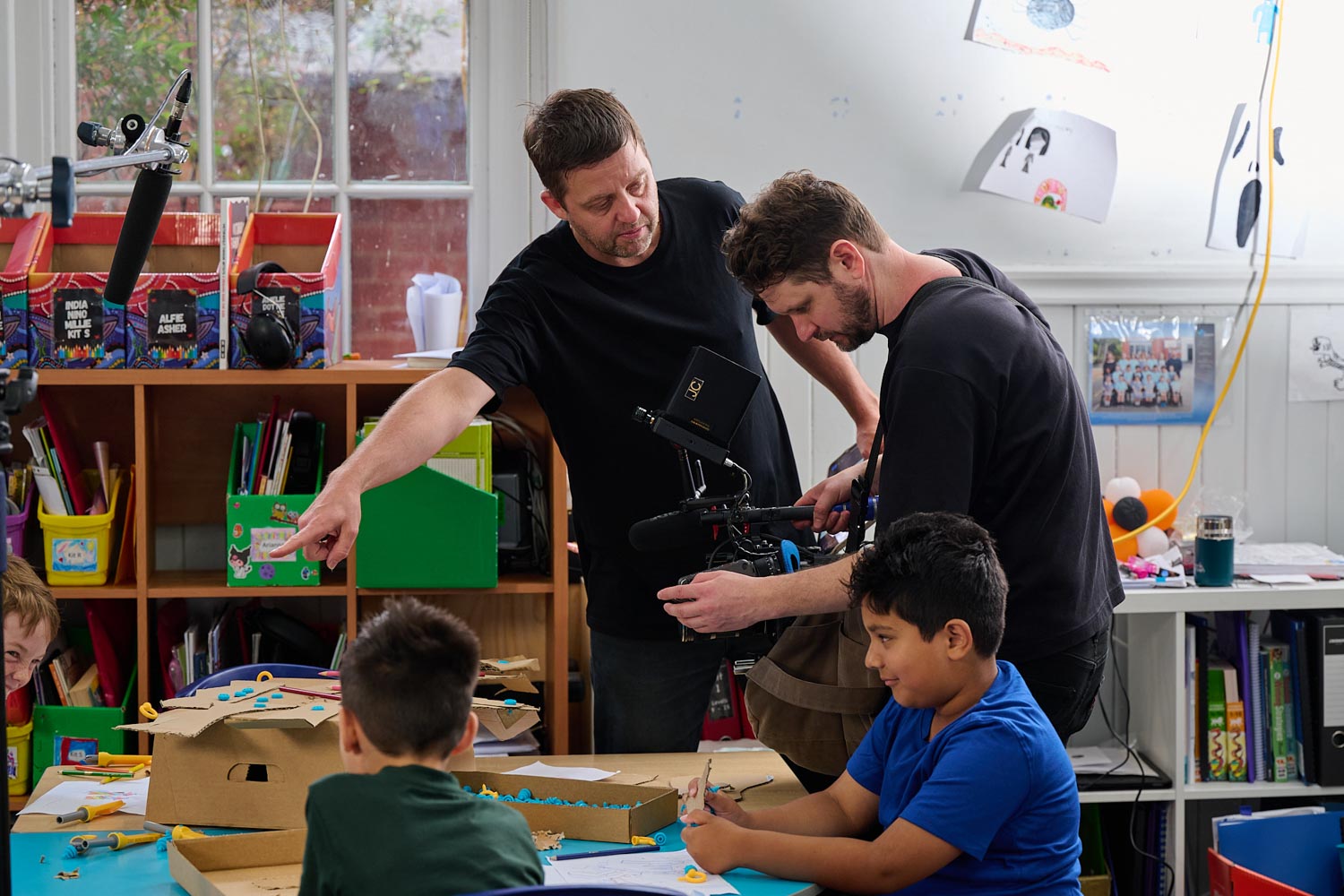
You don’t arrive and start shooting. You arrive, you spend time, you let the kids get used to the crew, the cameras, the space. By the time you roll, it doesn’t feel like a film set. It just feels like a really good day at school.Alec McCloskey brought his own children — Luc and Frances McCloskey — into the project, which says something about the kind of environment that was created on the day. When the director’s kids are part of the cast across two of the three groups, the tone on set is established before a frame is shot.
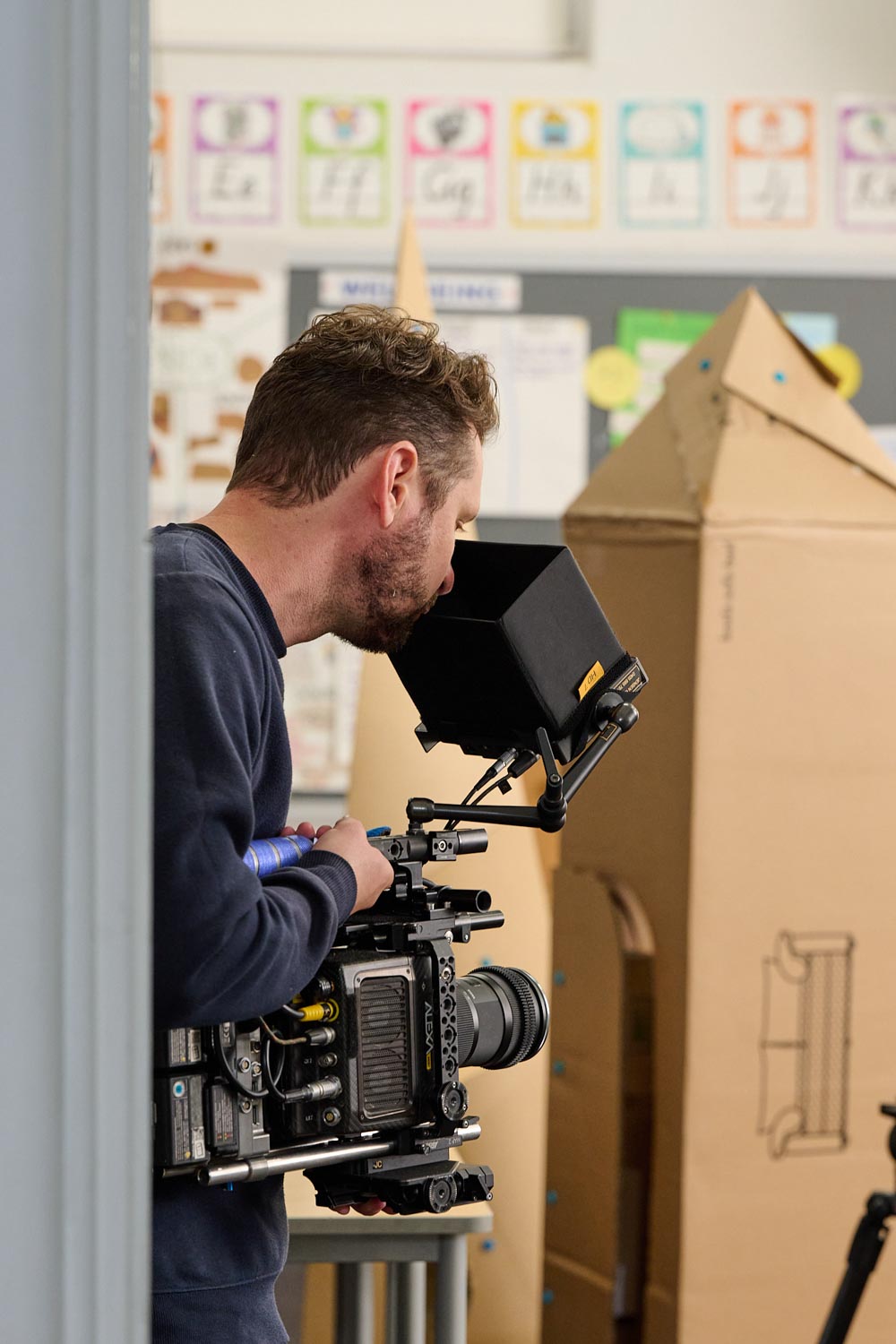
Managing twenty-three children across three age groups and a 10.5-hour shoot day — crew call at 7am, camera wrap at 5:30pm — required a production structure that was tight without ever feeling rushed. Stephen Di Gravio as 2nd AD kept the floor moving. Jensen Cope and Luis Arnet kept the cameras ready.
Melissa Butters captured stills throughout. The whole crew worked with the quiet efficiency that keeps a school feeling like a school rather than a production.Every response, every anecdote, every reaction from the kids was original and from the heart. That’s not something you can manufacture. It’s the result of the right environment, the right preparation, and twenty years of knowing how to get the best out of young talent.
Was AI Used?
No. The film was captured and edited entirely through traditional production craft. The authenticity of the content — real kids, real teachers, real creativity — didn’t need anything else.
KEY OUTPUTS
- 1 × hero education film
Delivered for use on MakeDo’s education tab — designed to introduce the product to schools, educators and curriculum decision-makers locally and internationally.
Key Challenges
Working exclusively with real classroom teachers from Ripponlea Primary School — not actors or presenters — across four teachers and three age groups. Getting genuine, on-camera confidence from educators who had never worked in front of a professional crew before required patience, preparation and the kind of trust that only comes from a relaxed, well-run set.
Coordinating twenty-three children across three staggered age groups throughout a single shoot day — each group requiring its own warm-up, its own energy and its own creative direction.Creating an environment relaxed and safe enough that children of very different ages would genuinely forget the cameras and just be themselves. That takes time, patience and real experience with young talent.
Working within a school environment with real duty-of-care obligations — every child accompanied by a parent, safety protocols in place, crew behaviour and set tone managed accordingly throughout a 10.5-hourday.Sourcing authentic, enthusiastic talent entirely through the school community and personal networks — notby audition, but by genuinely understanding which kids light up when MakeDo is in their hands.
Capturing meaningful, usable content from real, unscripted children and teachers across a full day of production — knowing that the best moments can’t be directed, only created for and then caught.